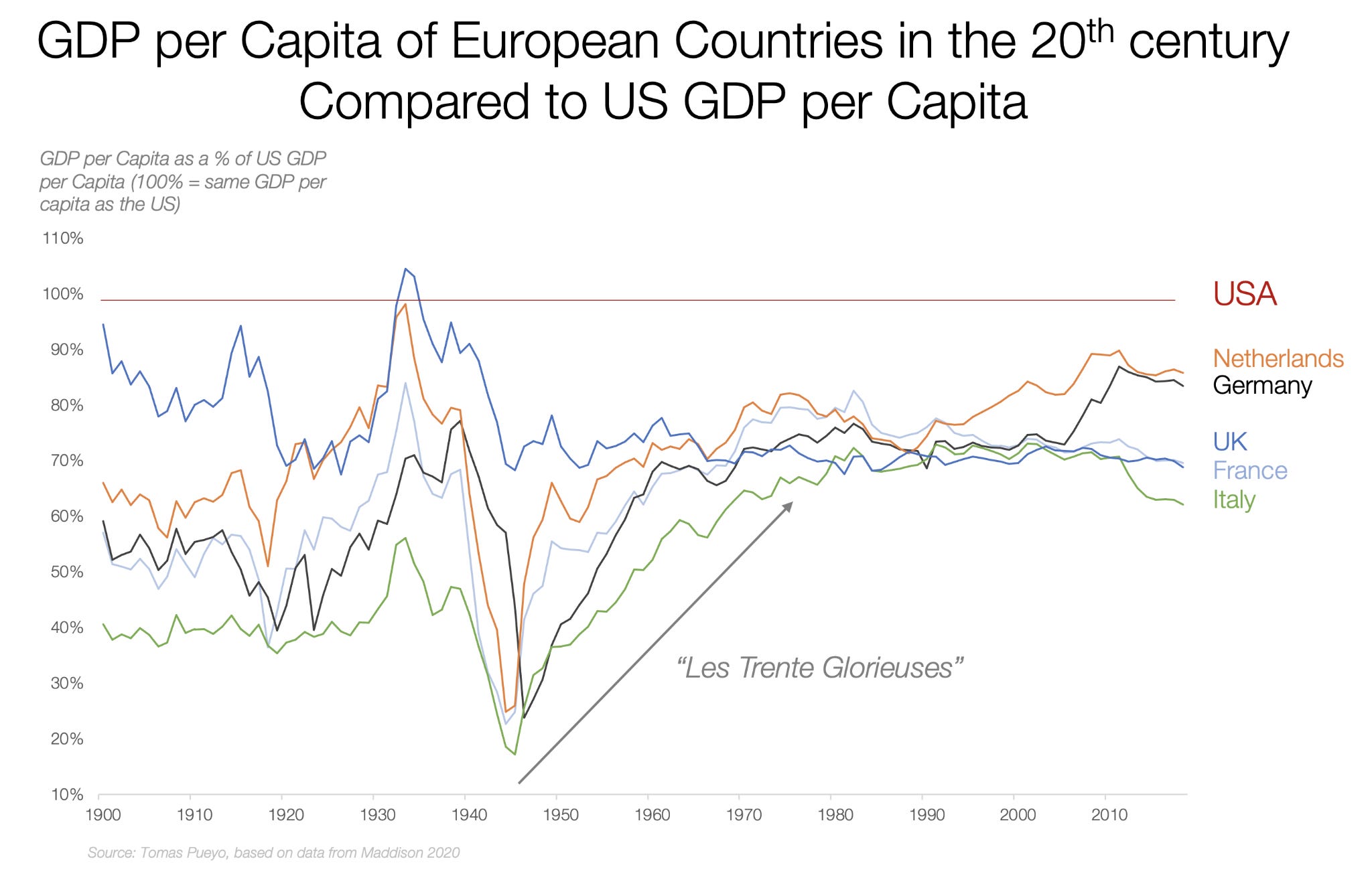
Americans typically don’t realize how lucky they were that World War II caused so much chaos in Europe and many of the best minds flooded to the US to kickstart the technology revolution and seed the economic powerhouse that it is today.
> Americans typically don’t realize how lucky they were
And, with all due respect, many people outside the US don't realise how lucky the best minds were that there was a stable, prosperous, (actively) welcoming society to bring these best minds out of the self-inflicted chaos of Europe.
Interestingly, the name Nimitz doesn't sound that much Germanic, it could have been a Germanized version of an originally Slavic name like Němec. (Which would mean "German"; quite a recursion :)
The Nimitz family stems from Bremen, and quite deeply so (13th century), which would fit, because Bremen/Lueneburger Heide is not that far from territories settled by Polabian Slavs.
Oh, wow. I vaguely seem to remember that there was an aircraft carrier or other naval ship named after him. Read it somewhere long back, IIRC. Will google it, or it may be in your link.
It was a real luck of the historical draw, talk about fan boys adding to canon! Just in quick succession and with ample room for pedantry.
In Europe you have the
Enlightenment with all that entails.
Then in America you have Ben Franklin and then the revolution. Later Charles E Elliot gets frustrated and tours the great schools in Europe only to come back to boston and reform Harvard. Which leads to it being emulated at Stanford.
Later on the US military decides on Stanford to focus on its microwave research for radar setting the groundwork for what becomes Silicon Valley.
I would want to add to such an essay the important details about how the King of France financed US independence and supplied a navy to fight the King of England on behalf of the US.
But to limit ourselves to the outcome of WWII, there isn't much more to say. The US actively sought these brilliant refugees. The latter were glad to escape to a country that wasn't a murderous dictatorship.
Absolutely! I really brushed over it, but for those that are one of the lucky 10,000…
Franklin is a celebrity in his day, and is such a party animal and keen wit he wins over the french aristocracy. Leading to said fleet, which is undoubtedly the key factor in deciding the outcome of the revolutionary with their presence at the battle of Yorktown. But before all that he is going up down the colonies organizing philosophical groups, his Juntas, meeting and connecting the thinkers and subsequent founding fathers. While in addition running a printing press sowing popular dissent and none more influential than publishing Thomas Paine’s pamphlets. The dude was the original punk!
>Franklin is a celebrity in his day, and is such a party animal and keen wit he wins over the french aristocracy.
Leading to said fleet, which is undoubtedly the key factor in deciding the outcome of the revolutionary with their presence at the battle of Yorktown.
That was probably also because he was a good diplomat. I have read his autobiography, which is very interesting, and shows how versatile he was.
Back when Europeans first started to conquer the new world, the world was still firmly in the Malthusian Trap, where populations were up against carrying capacity constraints (at the extent technology levels). I think this had pernicious effects on societies. Excess population made people expendable and callous. It would not have been easy to try to convince people to allow Others their rights.
I don't think it's a coincidence that this flowering of democracy and liberalism occurred in a context where conquest had opened up land to expansion and had at least temporarily relaxed the Malthusian constraints.
>And it’s consequential because today, the U.S. does not have as much room in places with a reputation for the kind of diversity needed for e.g. a tech sector.
Please tell me which of the tribes that lost land to the US never stole land from another? Please show me a land in the world that never had slavery. Please tell me the origin of the English word “slave”. Please explain what your last sentence means.
Oh you mean like the Middle East where it’s still legal? Or Africa where it’s still legal? When you want me to look up dates, should my research be when various American Indian tribes made it illegal?
My point with all of this is that humanity in general sucks. We only get better due to active, willful improvement.
Self-inflicted is a tad questionable. US played a big role in industrializing USSR. US also played a role in post-WWI peace deals which eventually lead to world war part II.
> US also played a role in post-WWI peace deals which eventually lead to world war part II.
Woodrow Wilson's proposed peace deal didn't involve imposing harsh reparations on Germany. That was the doing of Georges Clemenceau, the prime minister of France, who was under pressure to make Germany's reparations bill as large as possible as retribution for the war.
Indeed, though it's also true that the Germans should be held accountable for their own actions during the war, and not solely held responsible for WWI itself, which was a continent-wide effort.
why should they be? none of the so called winners are held accountable for their actions. best we can do is forget it all and move on, otherwise it will forever be a case of finger pointing.
By "the Germans" I don't mean modern-day Germans, I mean the people of the era. And indeed, nobody should get a pass for the atrocities of war, the winners included. But no, we should not "forget it all", that's the worst possible thing you could do. The war happened, it was terrible, its consequences reverberate to this day, and we should all remember how it happened and why so that we can attempt to avoid having it happen again.
There’s another important bit. Wilson policies played a big role in creating fractured Central Europe in interwar. I’m personally torn on this. On one hand, this gave my country a chance for independence. On the other hand, this made a bunch of puppets for Germany and Russia to play with. Maybe a unified buffer would have prevented WWII.
It's fine to speculate what could have been, but historically the record for regional "nation building" of this sort has been mixed at best, given the examples of former Czechoslovakia and Yugoslavia.
Yep. But it was a mess either way. On the other hand, if there was some sort of Central Europe superpower building, Poland would probably have abused that. As it did anyway eventually occupying lands of 3 of its neighbors before being taken down by 4th…
In any case, some sort of Intermarium probably was the only thing that could have prevented WWII in one shape or another.
It's my understanding that it's a myth that reparations led to the economic catastrophe in interwar Germany. What's more important is that Germany financed WW1 by borrowing. (EDIT: being corrected below.)
Reparations were in the same order of magnitude as debt. In the end, it was 100-120B marks in debt vs 121B reparations (after reductions). Hard to find definitive numbers on debt as there are only estimations out there.
Still as a French, I think we could have done better much earlier. Much much earlier. The US isnt the cause of our problems, we are. We are even the cause of the US in the first place, you know, eradicating the natives, enslaving the africans, colonizing the land.
It's ALL self-inflicted. But there was no sense of self at the time, what's new today is that Europe is starting, slowly and shakily, to see itself as a whole. At least I cannot imagine today ever wanting to murder a German more than a French. Ever.
I meant Europeans, you know, we start seeing ourselves as a whole now, I'm not just French in my mind - the US was a "European" colony, with Spain, Portugal, France, Italy and the UK completely transforming the land. Without Europe, there would be no states to unite, right ?
But ofc at the time it was very different, Europeans didn't exist per se, each country saw itself as completely different from the others.
What I meant is accusing the US to cause a problem in Europe is a tautology: we made the US in a way, so if the US come back to cause issues, well, it's ALSO our own fault. Every problem in Europe is "self" (that "self" changed with time) inflicted, it's not the Asians or the Africans causing conflicts, there is no external factor to blame, we MUST fix them our"selves".
Ironically, lots of problems in Africa or Asia were also inflicted by Europeans, they can claim an external factor, them. We really messed up a lot of the world, for reasons that are now beyond comprehension since we're raised by the people who stopped it, and it's a sin I have trouble to carry sometimes. Gladly, most alive today seem to have forgotten, forgiven or benefitted from it, doesn't make me forget those not alive today :(
AFAIK it was by design, the US policy makers actively worked for it.
Also, I think the US will have something similar in reverse: Some of the brightest people educated in the US are going back to their home countries because they have visa troubles, social problems or simply better opportunities due to simple things like housing or structural things like the industry moved there.
Also, judging by the enormous hate stream on the social media, many can be nudged to move out of the US to have some piece of mind. After Brexit, many EU citizens choose not to stay in UK even if they had that option because they have become a political subject and since they are not desperate why stay and risk it?
China appear to be the next frontrunner in this. Many times, if you venture outside of the angloshpere you find out that somewhere(often in China) somebody is already doing it at the same level or better.
There probably is going to be a correction at valuations. Cool stuff is happening in China and elsewhere and the USA is in a disarray with idelogies so extreme that are not too far of from the stuff that ruined Europe in the first half of the 1900s. Coup attempts, assassination attempts, election denial, mainstream targeting of group of people, rich looking into capitalising on all that when social disparity is so large that some live like kings others teetering - this is not a healthy society.
They have a lot of problems I'm reading about but there will be a void with the fall of the US from global superpower status and that void wouldn't be left unattended.
Anyway, with the banning of TikTok it's pretty clear to me: No more global companies without hard tech. The US used to be the bastion of free global trade but they resigned. Anything that relies on things like network effect or branding will become local because countries can enforce it. If some country has the engineering capacity to build a website where people post texts and media and others like and share that media then the American version wouldn't be allowed.
Therefore, the US economy will become as powerful as having about 300M citizens, not as global power. China has huge number of citizens, they win by default as long as they can do the hard tech good enough and they apparently can do that.
US embargoes only pushed them to make their local alternatives and they made them pretty good, whatever they make they make it for over a billion people.
EU has a version of this problem, that is they don't have one large chunk of people who speak the same language and trade on the same rules. The trading on the same rules is something that EU fixed a lot but the EU is still fragmented and this makes EU companies anaemic because they can't get huge without going global. When the global trade is gone, the US will have the same issue(probably still better situation than EU but much worse than China).
A lot of people aren't as optimistic about China anymore because they constricted their population pyramid too much (one child policy), haven't reached first world affluence and are now facing an aging population. By 2100 China might be down to 850m people and the US might even grow to 450m. Economic prowess is all that matters in the end, because economic power allows for military and industrial hegemony.
That's true, they have huge demographics issues. But the west has them too at different extent.
Also, Chinese don't operate on western principles therefore you can't expect same outcomes. Aging population issues are much different when you have enough production base that can sustain old people with small number of young people(they no longer rely on manual labour as much as they used to). In the west aging population means reduction in consumption(therefore reduced investments, economy slowdown etc.), but in countries like China that doesn't have to be a problem, they can simply keep producing as needed. When the west was preoccupied with investing all the money into optimising advertisement, they invested in wast infrastructure.
I'm personally more concerned about the west than China. Well, of course I would be since I'm part of the west but yeah I think you get the point.
The things don't stay the same outside of the US, therefore you can't expect that doing the same thing will always result in the way.
There are very few technologies where the US or EU has an edge over China. Embargoes helped a lot with that.
In fact it becomes absurd, for example the EU/US/UK wants to make the world a better place by replacing ICE cars with electric ones. China builds great cars for cheap in huge amounts and the EU/US/UK act like Gavin Belson saying "I don’t want to live in a world where someone else makes the world a better place better than we do". There you lose the environment claims, even if EU/US/UK have a point.
The west lost the technological edge, the Americans like to claim that EU regulated too much but in the American case it appears that not regulated billionaires didn't invest in tech but resorted into rent seeking and now they expect the politicians to protect them from the Chinese companies who allegedly received unfair support from their governments but nonetheless they made better products.
I don't know I'm not a clairvoyant or expert analyst in this stuff, I'm just pessimistic on the near future of humanity and the west will be the bigger losers because they lost the plot.
> In fact it becomes absurd, for example the EU/US/UK wants to make the world a better place by replacing ICE cars with electric ones. China builds great cars for cheap in huge amounts and the EU/US/UK act like Gavin Belson saying "I don’t want to live in a world where someone else makes the world a better place better than we do".
You have to think about this like a country that has the ability to globally project power or take part in regional war.
The US (and Europe) doesn’t want to lose its domestic auto manufacturing industry because it can be easily retooled to pump out war machines when required. [0]
You don’t let a foreign nation (especially an adversarial nation like China) destroy an industry that is critical during total war if you’re the global hegemon, or more realistically, a country that may go to war in the future (see Volvo in Sweden, Renault in France, etc)
Here’s GM Defense, Ford and Chrysler have similar histories during the World Wars, as do auto manufacturers in various European countries.
> World War 1: Over 90 percent of GM’s truck production was redirected to war manufacturing during the First World War.
> World War 2: GM began delivering war materiel as early as 1940 with all U.S. manufacturing plants – over 100 in total – eventually being converted to produce defense goods. Between February 10, 1942 and September 9, 1945, not a single passenger car for civilian use left the assembly line at any GM plant.
I understand the motives and I agree, however it still means that China makes batter cheaper EVs that supposedly can save the planet and suddenly saving the planet is not THAT important and it can wait when we play politics, meanwhile why don't you eat less meat and use paper straws?
Why are you giving a free hand to China to do as it likes and then blame the west for following its interest? Why do you give China a pass at forcing any western business to always enter a joint enterprise with chinese firms if it wants to do business in China? Seeing a lot of critique about the blunders of the west for trying to have more leverage and no critique for chinese practices.
I'm not giving China a free pass for anything. The stuff you are talking about paved the way for Chinese catching up and eventually surpassing the west but that doesn't change the outcome.
I'm not a China fan at all, in fact I'm very concerned that the west will imitate China and in fact banning TikTok was a sign of it. Banning is the Chinese way.
The Chinese don’t support free trade. Why should the US support free trade with China? Why not embargo them until such time as China opens up? This isn’t a hypocritical contradiction. The US supports free trade with those who support free trade. They suppose power imbalances with those who support power imbalances.
The US becomes a China with crazy politics and poor infrastructure then. A shitty world where the citizens are a commodity that can be pushed around to consume from companies who such at R&D but good at lobbying.
Remember when the US was pro-free speech and criticised dictatorships for blocking social media? Kiss good bye to that, now it's US that blocks it. Chinese citizen experience, imported into the west.
If Trump wins, there's Project 2025 where they plan to replace every government position with party loyalists - Just like China.
> Remember when the US was pro-free speech and criticised dictatorships for blocking social media?
Outside congresspeople pushing for re-election I feel like I haven't heard this at all. Not since the Snowden leaks has the US been so happy-go-lucky with their denouncement of surveillance.
Not just cool stuff... I just finished listening to several podcasts with a Czech journalist who covered China for decades.
He said that under Xi, the country has become superparanoid. Before Xi's term, people would talk to journalists mostly freely, and even foreign journalists would get a pass in their daily activities unless they touched something really sensitive (Falun Gong, Tibet, Uyghur unrest).
After Xi came to power, the situation started to worsen, police started to follow journalists around and harass them for banal reasons, regular Chinese started being afraid of talking even about trivial topics. The former Overton window narrowed to a "compulsory vs. banned" dichotomy. One of his last experiences was that he went to a tomato processing factory to report on tomato harvest and was immediately arrested by the police because how dare you record something about a tomato factory.
I don't think this environment is going to be particularly conductive to economic growth, and the latest trends seem to concur. China is strangling its future growth in the name of National Security.
Americans were richer than even Brits back when they were still Brits
The American colonies led Great Britain in purchasing power per capita from 1700, and possibly from 1650, until 1774, even counting slaves in the population
The common view that American per capita income did not overtake that of Britain until the start of the 20th century appears to be off the mark by two centuries or longer.
This remark should leave a bad taste in one’s mouth. Obviously being immoral and exploiting human beings is an economic advantage. And excluding them in the census but benefitting from their work would be dehumanizing them even more.
It's an advantage for those doing the exploiting, but overall it's an economic disadvantage, if your per capita statistic includes the slaves when counting heads.
Yes, educating all people will generate a bigger advantage in total. What I meant was that an individual will obviously make more money for themselves if they have free labor that they can exploit. So a society of N educated people will make less money than one of N people + S enslaved people, but a society of N + S educated people would make even more.
I'm also constantly reminded that there was a counterflow brain-drain, from the US to Europe, both before and after WWII, largely of African-Americans fleeing oppression not just in the US South, but throughout the country.
James Baldwin, Josephine Baker, Langston Hughes, Claude McKay, James Baldwin, Richard Wright, Nina Simone. Others who didn't necessarily emigrate to Europe did spend much time there: Paul Robeson, John Coltrane, Lillian Smith, Alain Locke, and Ethel Waters amongst them.
You can also see patterns in movement of creative and technical talent within the US. There is of course the Great Migration from the South to northern, mostly industrial cities. California collected creative and technical talent from across the country, to a much greater extent than already established and notable Eastern states with large cities (New York, Massachusetts, Pennsylvania, ...). In some specific cases (the establishment of Hollywood), we know that lax patent enforcement and ready escape to Mexico was a strong draw for the early film industry against Edison's lawyers. I suspect that in addition to the much-ballyhooed physical climate, reduced social strictures, ease of land development, and rapidly-growing metro regions particularly near Los Angeles and the San Francisco Bay Area, contributed. There's also of course the WWII and post-war / Cold War military economy which played a tremendous role.
You also saw organisations such as RAND moving wholesale to the West in the 1950s, for a combination of factors: more space, closer to major aerospace operations. Entire families were shipped west by railroad.
My hypothesis is that intellectual and creative talent seek freedom, in both positive (opportunity) and avoidance of negative (oppression, suppression, abuse) senses. As much as we talk of capital being more mobile than labour, creative labour being concentrated in a few individuals is especially mobile, and quite sensitive to conditions of oppression. One obvious risk shares some parallels with a paradox of transportation infrastructure: as transportation improves, formerly greenfield / undeveloped regions become developed and land values explode such that further improvements in transportation become exceedingly expensive, both financially and politically. In the intellectual and creative realms, moats and ramparts, institutional rigidities, commercial and political allegiances, etc., emerge, which actively retard further progress.
The challenge is in identifying where new regions (in the physical and geographic sense) of opportunity might be emerging.
In terms of GPD the US was the world's largest economy well before World War I. Europe choosing to self-immolate twice before mid-century only served to widen the gap.
If you consider US versus any single European country yes.
But we are talking about US getting brains from all over Europe. The combined GDP of the top 3 European countries (Germany, UK, France) pre WW1/2 is larger than the US, just as the GDP per capita of any individual European country pre WW1/2 is higher as well.
references here are important.. it seems reductive framing to judge using economic units without acknowledging the interdependancies of real human living conditions and contexts, around the globe; secondly, unified national currency in the USA was not exactly a settled thing, not long before that era.. so measuring has to have some wrinkles in it, no?
The US surpassed the UK in per capita income in the 1880s. However, American yeomen farmers, factory workers etc. were far better off than (non-UK) Europeans even in 1800, hence millions of Europeans immigrating. By 1913, the American was still earning almost twice as much as the German or French: https://en.wikipedia.org/wiki/List_of_regions_by_past_GDP_(P...
Huh? During the preceding decades the US invented the skyscraper, was home to the world’s tallest building, invented the light bulb, air conditioning, the airplane, the supermarket, and cotton candy!
This is something I always say and amazed by. Just imagine; all the knowledge of transistors, radar and nuclear fission…All because of World Wars and, as you mentioned, all those great minds that came to the USA fleeing the war. Amazing
Not quite true in regard to border closures. It certainly became much more difficult to move around or out of Occupied Europe, but significant numbers of people managed to do so (via for example Portugal, Turkey and Vichy Africa).
Not only the ones that fled, there was also a huge brain drain after world war into both US and USSR, with von Braun probably being the most prominent.
Looks like some people ain’t aware how Soviets took German scientists as POVs and forced them to work for them. Americans did pretty much the same thing playing Nuremberg card.
I suggest another vision: how many talents, students with potential, teachers etc we ALL lost in WWI and WWII? You know back than in most countries serving in the army was mandatory.
Here's some innovative American peanut butter to go with your pure jelly:
We didn't trump up anything about American individualism, ingenuity and innovation. Rather, a visiting European, de Toqueville, wrote about it extensively as early as 1835.
"...I have nowhere seen women occupying a loftier position; and if I were asked, ... to what the singular prosperity and growing strength of that people ought mainly to be attributed, I should reply,—to the superiority of their women."
"Tocqueville noted that religion played a leading role in American life in the 1830s, due to its being constitutionally separated from government. Far from objecting to this situation, he observed that Americans found this disestablishment quite satisfactory, in contrast to France, with its outright antagonism between avowedly religious people and supporters of democracy."
"It's easy to "innovate" when you're starting from a "clean slate"."
This is an interesting remark. It seems that countries like Estonia or Poland, which significantly overhauled their systems in the 1990s, are more innovative than Italy, Germany or France, whose systems are much older and somewhat ossified / clogged with bureaucracy.
But the US system is even older, and it still produces good results. Heck, the UK system is ancient, and the UK has a lot of innovation going on, both in tech and biotech.
I'll give a different example: Romania (mostly) skipped (A/V)DSL and went directly to optical fiber, which resulted in having the top-spot in download speed for a couple of years.
The US started from 100m ahead - the level Europe was at the time - so they already had a foundation - and (imo) made it easier to look ahead from atop a (100m) mound.
Can you please stop posting ideological and/or nationalistic and/or other flamewar comments to HN? It's not what this site is for, destroys what it is for, the site guidelines ask you to avoid it, and you've unfortunately been doing it a whole lot lately. In fact it looks like you're crossing into trolling. We have to ban accounts that post this way, so it would be good if you'd please stop.