PFAS and PFOA are going to be huge in the next few decades. Additionally, lots of pharmaceutical compounds are going to end up highly regulated in waste effluent.
I've recently discovered that my computer mouse is coated in PTFE. Those sealing tapes that goes into pipe threads are pure made of it too. Microwave popcorn contains it. Dental floss.
I've been trying to track sources of PFAS in my home and always end up discovering something unexpected that contains it. Those compounds are literally everywhere nowadays, this is scary.
Yeah... plastics are another one that's not going to be looked on fondly by future generations. Nasty bioactive stuff that's small enough to get everywhere and get into everything. And we literally make so much of it so it can be thrown out easily.
The Fastfood plastic coated Drinkcontainer, thrown into a potatoe field, literally comes back next year in everyones fries. Might aswell eat it directly..
Plastic is economically incredible, not because you get more of what you were already buying (though that's cool too), but rather because entirely new problem-solving products enter your purchase power level.
Wealthy nations have a distorted view not because plastic is cheap (though it is), but because we're so rich that we no longer remember what it's like to be able to afford your first pair of shoes.
This is already an issue, the fancy chemicals in modern sunscreens contribute to the destruction of coral reefs. When anywhere near these places, you are supposed to wear reef-safe sunscreens that are much simpler, basically zinc oxide or titanium dioxide (white pigments).
Probably still better than skin cancer overall. There are also inert mineral sunscreens. I still go for long clothes over sunscreen personally, I never liked roasting in the sun
Why speculating then? There is plenty of hard data on skin testing of various sunscreens. There are physical sunscreens, too, which were around even longer. We have MUCH better understanding of biological processes as well than in asbestos times. What is this drive that makes supposedly technologically literate people flock to the GP question and come up with unfounded paranoid theories?
The thing that makes people answer with unfounded theories is that GP is literally asking for undetected issues. So, if it was a well founded theory, it wouldn’t be undetected, right?
Sunscreen has had environmental issues, contamination issues, and effectiveness issues (the whole UVA/UVB thing). None of those indicate a problem with the underlying product when used properly, and it is definitely better than nothing! I prefer to cover up with clothes and just avoid the noon-time sun, though.
They're cheap (at least, subsidized), they're long lasting (maybe), they're energy efficient (certainly), and they emit a huge amount of blue, squarely in the wavelengths that the human eye uses to determine if it's day or night. The practical effect is that if you're using LED lighting, it's quite hard to go to sleep at night - and we know that sleep deprivation is really bad for humans across pretty much any metric you might care to examine.
The way that white LEDs work is simple enough: They're a blue LED. Bright, efficient, and very much not anything "white." So, the package is coated with various sorts of phosphors that take some of the energy from the blue wavelengths, and move it down into the reds and yellows and greens. Presto, white light of your desired color temperature! Daylight, warm, it can be done.
Unfortunately, it's not the same spectrum as an incandescent emitter at the same color temperature - there's still a huge chunk of blue over at one end. Color temperature is just an average - you need to look at the CRI (color rendering index) to get a better feel for it, and most LEDs, while better than the utterly ugly light of compact florescent (seriously, yuck - and the spectrum shows why), still aren't great. They have a lot of blue. The cheaper ones, common in homes, have a lot of blue. Even the "red shift dimming" one still have a lot of blue when dimmed.
And this blue is right in the range that your body uses to inhibit melatonin production. There are separate receptors in the eye that pick up light in the ~440-480nm range, and go "Oh, hey, it's day - stay awake!" If you have LEDs, these are doing the same thing in the evening. And perhaps as you head to bed, if you've got LEDs.
We all broadly know that screens are bad for sleep because of the blue, but modern LED bulbs are exactly the same thing. Worse, actually, because they tend to be above us - in the "sky" field of view, which is what these detectors are optimized for.
If you have the resources to try it, try replacing some of your evening bulbs with incandescent bulbs on a dimmer, and dim them down pretty hard as you're starting to wind down and head to bed. Or use kerosene lanterns or something - you want an incandescent emitter, which, in the dimmer ranges, emits almost no blue at all. And then avoid screens entirely for a few hours before bed. See how you sleep. If it's not improved, bug me, I'll buy your bulbs from you.
Of course, cell phones and modern social media are the easy one that we're already seeing backlash to. But that's easy. LED bulbs are more subtle in their manner of being toxic to humans.
It's amusing for me to read that as I feel the exact opposite where it comes to illumination. I dearly miss the feel of warm, orange yellow lighting from incandescents indoors and sodium lighting outdoors.
My main beef with LEDs is being in proximity of cheap LEDs with low refresh rates - there's a shop I've stopped visiting because I get a sore head within minutes of being in there, from seeing everything clumsily strobe. Ironically, they sell lighting. I've talked to the boss in there, but he just doesn't see it.
I do wonder whether younger kids sense visual refresh rates moreso than older people, and if so, what effect that might have on them. Certainly stresses my bonce.
I know they exist, and the good ones that specifically work on reducing the blue are something like $30/ea. I'm unclear as to how they dim - some LEDs just turn into this dim, grey, nasty light, though.
Meanwhile, dimmed incandescents are even better and cost radically less up front - yes, they use more power, and in the winter the heat emissions are welcome. And we use radically less light, because you don't need that much light at night. A kerosene lantern worth of light is more than enough to read by.
This is an overreaction. Incandescent bulbs will continue to be sold in the form of "rough service" bulbs for high temperature environments like ovens. But regardless you're better off buying high-CRI LED bulbs if you're that concerned about blue light.
I'm aware and have been doing so. No idea why you're being (apparently) downvoted, what you're saying is factually correct, to include the politicians involved.
I'm quite upset that we've really ignored the research on blue emissions in white LEDs, because various studies have demonstrated exactly the effect I'm talking about - reduced sleep quality in homes with incandescent lights.
It stands to reason that there will be as many unknown negative long-term effects of the mRNA vaccines as there were unknown negative short-term effects.
Surprised this hasn't been downvoted to oblivion yet.
It is certainly tricky to balance short-term potential benefits (such as a better chance of surviving a covid infection) against long-term potential (and possibly unknown) harms (such as a higher chance of developing a chronic autoimmune disease.)
"Asbestos Cigarettes’ Related Diseases... Crocidolite asbestos in Kent Micronite cigarettes is known to cause the following diseases: Lung cancer, Mesothelioma, Laryngeal cancer, Ovarian cancer, Asbestosis."
Recent studies have linked asbestos exposure to an increased risk of ovarian cancer, particularly among people who used asbestos-contaminated talcum powder. However, if you're getting ovarian cancer from these cigarettes, chances are you're smoking them wrong.
Obviously the wondrous collection of vapours as you smoke them is not implicated.
You grab a fag and stuff it in your gob. Fire it up. Two inches or so soon disappears. The last inch lingers a bit until you get that slightly rubbery taste that indicates its over. You might continue anyway for a while - suck/savour (hot n nasty)/blow.
Been there. For 30 years. Five years ex-smoker but some damage done and not too sure how much.
Worrying about the effect of stubbing out on your own health is nonsense and ridiculous - who cares whether asbestos fibres are whole or dust after stuffing the bloody things in your gob? At that point you are endangering everyone in breathing range.
Anyone who finds breathing normally a bit of a challenge sometimes or always will soon disabuse you of one or two ideas.
This is ultimately what killed my father: 45 years of smoking until one day in 2017 when he quit cold turkey and never picked up another cigarette. By that time the damage had been done. He had severe COPD. He was well passed the point of being a viable lung transplant candidate. He wouldn't survive the surgery. Besides, he already battled a litany of health issues stemming directly from smoking.
Fast forward to last year. His ability to breath normally was already a distant memory, and his ability to breath in any capacity without a struggle had become the new normal. After an evening in the hospital, I picked him and Mum up before a quick detour to the medical supplier in town to pick up... oxygen cylinders and a concentrator. About four months later his condition had deteriorated enough that his GP suggested hospice. A year after this initial but rapid decline and he was gone.
COPD is irreversible. It can be slowed, maybe even halted for a time, but it is impossible to reverse.
I'm glad you quit. You may have quit early enough to maintain a normal life. Regardless, I'm proud of you for taking that important first step.
For anyone else reading this who may be a smoker: Please, I implore you, consider quitting today. I know how the story ends. I've seen it first hand.
You're in good shape then! By the time my father quit, the most he could do was shuffle about.
And you're absolutely right—it's hard to give up. I still remember the conversation he had with his pulmonologist. The doctor asked "So what made you choose to quit?"
Dad said "I decided to. It was a conscious choice that I wasn't doing this any more."
The doctor looked at him, smiled, and said "That's exactly right."
I'd guess you went through the same process: It's a choice. False starts to quit are simply an exercise in kicking the can down the road. Actually quitting is a conscious, decisive effort. The only other people on the planet who know what it's like are those who have suffered addiction. The rest of us? We truly don't know what you have to go through when you quit.
"The rest of us? We truly don't know what you have to go through when you quit."
You have had to deal with the fallout and loss. My mum died from cancer when I was about 25. It was a female only variety - I forget the exact name. She had an initial onslaught which was diagnosed in reasonable time, an operation that she described as "quite unpleasant" and a course of radiotherapy. I should probably point out that "quite unpleasant" is a euphemism.
... remission ... all clear ... ... oh sorry its back ... palliative care. Funeral.
Losing a parent early is horrible, even when you are nominally grown up. You should have at least 20-40 years as an adult with your parents, if only so they can ram the point home about what responsibility really looks like as you foist your ankle biters off on the oldies so you can get some respite.
Sorry, we were discussing the fall out from addiction. Yes, it is horrific. Your dad gave up and that is quite an important thing. That shows he tried to do his best for himself and especially - his family. He was old enough and ugly enough to know exactly what was happening ... and he did his best, his very best: that I am sure of.
It's unpleasant to see the eventual culmination of things you knew would eventually come to pass despite pleadings to the contrary. I'm blessed to have been able to help Mum take care of him in his latter days. Even still, despite his advanced age (75), he was still young enough to technically have 5-10 good years left to enjoy life had he not succumbed to such addiction in his 20s. But, he did everything he could to the best of his abilities, as you said. I've a lot of notes to eventually go through on some hobbies of his that I will one day dig into. The one blessing with this is when they have ample time to get their affairs in order and share things they wanted you to know.
I understand this probably sounds a bit morbid, but it's life, isn't it? It's a good reminder to us all that what we have while we're here on this Earth is incredibly fragile and we need to cherish this gift as long as we are able.
Growing up, you always hear those tidbits of wisdom: Enjoy stories from your elders, because they won't be around forever. In youthful arrogance it's easy enough to laugh it off. Being older, though, you appreciate more. I'm grateful to have had the conversations that I did. I also have a deeper appreciation of some folks around Dad's age I've gotten to know over the last few years from church. Funny how things like this can help your perspective evolve over time...
The talcum powder doesn't need to contain asbestos to cause ovarian cancer. It'll do it on its own.
This has been known for a long time, but some of the talcum powder manufacturers are sitting on non-aesbestos-contaminated mines. To delay the inevitable bans (and to allow them to charge a premium), they heavily push the "aesbestos-contaminated talcum powder causes cancer" story. It is technically true, but intentionally misleading.
Oddly, I used to work with someone whose previous role was with the lawyer-led company that bought and runs asbestos.com
You know the article "I sell onions on the internet?". Well, you make a lot more money - and I do mean a lot more - selling leads to class action lawyers the way asbestos.com does.
Our 1948 house has asbestos cement shingle siding, which I imagine was the vinyl siding of its day back when.
We just leave it the hell alone and don't touch it unless we absolutely have to, and are happy with having a "mint green" house for now until eternity.
Admittedly it's done a good job of protecting the underlying wood siding, which would become its own expensive, ongoing, and laborious maintenance task.
The siding is absolutely no big deal because it doesn't release fibers unless it breaks. Because it's solid and brittle, when it _does_ break, hardly any goes into the air. Plus you'd be outside, likely protected by at least a gentle breeze.
Asbestos was used in floor tiles (generally on top of concrete), these are perfectly safe if kept waxed or with a clearcoat applied on top. But you'd want to wear a respirator if removing them.
There was asbestos insulation in attics and often between walls, or wrapped around pipes. That's the worst stuff and you should use a respirator just being around it. (I'd wear a respirator in any attic, to be honest.)
My understanding is this is one of the least problematic forms of asbestos. Seems like you are doing the right thing with it although I think it is paintable. If you have asbestos pipe insulation though--that stuff is really bad.
There's a certain irony in the fact a feature supposed to improve safety actually made an already dangerous thing massively more dangerous. That's got to be the most cancerous product ever brought to market that didn't outright irradiate its user.
Before seeing this, if someone told me "Radithor" was a superhero created in the 90s and described as "rad" in marketing, I would have no reason not to believe them.
At one point, consumer groups, Ikea, and fire fighters were all lobbying California to get rid of them.
They partially succeeded. If you have a couch / pillow / etc with a California label saying it contains flame retardants, immmediately wrap it in a plastic bag and send it to the dump.
California required more flame retardants than anywhere else on earth. Cats in California started developing previously unseen forms of cancer as a direct result.
I wonder if we're going to start seeing effects of a lot of people increasingly smoking weed habitually, especially joints with no filtering. Certainly not as bad as cigarettes but it still can't be good for you to inhale hot smoke.
There is some evidence that both thc and especially cbd are antiinflammatory, which might make it a little less bad, but yeah, all those odd and highly reactive hydrocarbons can't be good. Breathing anything other than clean air on purpose seems like generally a bad idea.
Maybe this is just my filter bubble (pun intended?) but since legalization, all of the people I knew who smoked weed but not cigarettes just switched to gummies.
I wonder how many people want THC but never wanted to smoke in the first place?
The byproducts of cannabis combustion are certainly not healthy, but the saving grace is that even the heaviest weed smokers inhale far less smoke than cigarette smokers.
And unlike tobacco, safer alternatives exist -- vaping doesn't require combustion, and edibles obviously carry no risk from inhalation.
Funny you mention this, because we’re already seeing it. In fact, I recall reading that unfiltered marijuana smoke is slightly more harmful to the lungs than unfiltered cigarette smoke.
I recently read the famous The Travels of Marco Polo by Rustichello da Pisa and remember calling this chapter out for my wife in delight of recognizing asbestos:
Everybody must be aware that it can be no animal's nature to live in fire, seeing that every animal is composed of all the four elements. Now I, Marco Polo, had a Turkish acquaintance of the name of Zurficar, and he was a very clever fellow. And this Turk related to Messer Marco Polo how he had lived three years in that region on behalf of the Great Kaan, in order to procure those Salamanders for him. He said that the way they got them was by digging in that mountain till they found a certain vein. The substance of this vein was then taken and crushed, and when so treated it divides as it were into fibres of wool, which they set forth to dry. When dry, these fibres were pounded in a great copper mortar, and then washed, so as to remove all the earth and to leave only the fibres like fibres of wool. These were then spun, and made into napkins. When first made these napkins are not very white, but by putting them into the fire for a while they come out as white as snow. And so again whenever they become dirty they are bleached by being put in the fire.
Now this, and nought else, is the truth about the Salamander, and the people of the country all say the same. Any other account of the matter is fabulous nonsense. And I may add that they have at Rome a napkin of this stuff, which the Grand Kaan sent to the Pope to make a wrapper for the Holy Sudarium of Jesus Christ.
I wonder if this was actually even problematic for them. My understanding is that asbestos is no worse than other rocks and silica formations when aerosolized it's just that asbestos was so useful it was much more heavily industrialized in a manner that was injurious to the lungs.
Asbestos is usually mined from bulk material that can easily aerosolize whereas most other mined metals have to be extracted from ore using chemical or electrolytic processes. There's fine dust but a lot less since the extraction process includes crushing the rocks after they've been brought out of the mine.
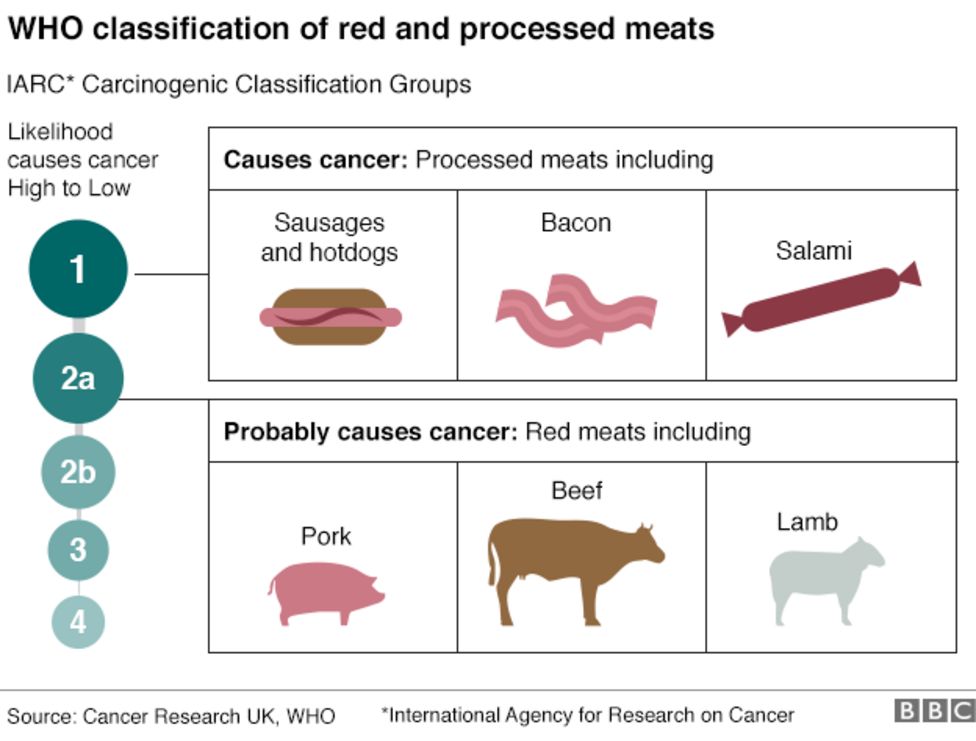
While talking about asbestos ... not enough people know they are are consuming food everyday that's classified by WHO as class 1 carcinogen (in the same group as asbestos and smoking), causing not only cancers of the stomach, bowels and prostate, but also contributing to other chronic illnesses like hypertension, heart disease, diabetes, copd ...
It's processed meat (bacon, ham, sausages, salami, corned beef, jerky, hot dogs, lunch meat, canned meat, chicken nuggets, and meat-based sauces) and (in the 2a category) red meat (beef, horse meat, mutton, venison, boar, hare, game).
The first link you provided makes it clear that the ‘class’ is about evidence and not severity, so “in the same group” doesn’t really communicate anything meaningful. Second, sneaking in class 2a into the list you describe as class 1 is misleading, though possibly unintentionally so.
Processed meat was classified as carcinogenic to humans(Group 1). Tobacco smoking and asbestos are also both classified as carcinogenic to humans(Group 1). Does it mean that consumption of processed meat is as carcinogenic as tobacco smoking and asbestos?
No, processed meat has been classified in the same category as causes of cancer such as tobacco smoking and asbestos (IARC Group 1, carcinogenic to humans), but this does NOT mean that they are all equally dangerous. The IARC classifications describe the strength of the scientific evidence about an agent being a cause of cancer, rather than assessing the level of risk.
This is misleading in the same way as saying "marijuana is a Schedule 1 drug, the same group as heroin!"
Class 1 just means it is a known carcinogen in humans, and says nothing about the degree to which it is carcinogenic, what cancers it is connected to, how that varies by intake or population, or much else. Sunlight, salted fish, charred foods, and just about any food packaged or prepared in plastic are all also known carcinogens. Any of those may well be very dangerous, but saying they're "in the same group" means almost nothing.
> On the other hand, meat that has been frozen or undergone mechanical processing like cutting and slicing is still considered unprocessed.
and
> Cooking at high temperatures or with the food in direct contact with a flame or a hot surface, as in barbecuing or pan-frying, produces more of certain types of carcinogenic chemicals
suggests that slow cooked cassorole and stews from meat directly killed straight off the farm (ie. what we here where I am mainly eat) is fine.
> processed meat has been classified in the same category as causes of cancer such as tobacco smoking and asbestos (IARC Group 1, carcinogenic to humans), but this does NOT mean that they are all equally dangerous. The IARC classifications describe the strength of the scientific evidence about an agent being a cause of cancer, rather than assessing the level of risk.
They should have put radium paint in the filter as well.
"Have trouble finding your butts when you drop them on a dark night? With Kent Microlite cigarettes with radium this is a problem no more! Four out of five surviving doctors who smoke cigarettes recommend Kent Microlite cigarettes, now with radium!"
"Kent Microlite cigarettes x-ray your lungs for you! With radium!"
Be sure to keep your cigarettes safe in a case made of U-235—conveniently designed to fit right in your shirt pocket. Also be sure to try our cocaine-laced wine[^1] aged in fine lead bottles!
Indeed: https://en.wikipedia.org/wiki/Coca_wine
This is the drink that inspired Coca Cola when the prohibition meant wine was off the table (but cocaine was fine)
Maybe. But if we're comparing like to like cocaine is by far the most dangerous central stimulant in common use. It's much easier to overdose on cocaine due to its effects on sodium channels leading to cardiac arrest, whereas amphetamine and methamphetamine are pretty hard to have a lethal overdose on. I guess MDMA is pretty dangerous in overdose too.
Alcohol definitely takes the victory in terms of long term damage though. It's hard to think of an organ system that isn't damaged by chronic alcohol abuse.
> Maybe. But if we're comparing like to like cocaine is by far the most dangerous central stimulant in common use.
That's... debatable at best. Contamination with fentanyl notwithstanding, it's relatively rare to have a fatal overdose on cocaine or methamphetamine. However, methamphetamine causes a lot of acute damage which cannot be dismissed.
Neither one is "safe", but methamphetamine causes more acute and long-term harm than cocaine does - in part due to the contexts in which it's used, but in part due to the pharmacokinetics of the drug itself.
I was only talking about lethal overdose, where cocaine has a significantly lower threshold than meth. For acute damage, cocaine also has a lot of that, like the potential for rhabdomyolysis and acute kidney damage.
Usage patterns have an effect for sure, but that was not a part of my analysis. I think if we're including real world patterns, we also have to include adulteration with other drugs, and in that case I think cocaine is the more dangerous. While adulteration with other phenethylamines is a very common thing with amphetamines, especially in Europe, the more dangerous ones like PMMA and 4-FA seem to be fairly rare these days. More common are 2/3-FA and various cathinones.
IRL cocaine is about as safe as caffeine and can be consumed in beverages (tea, Coca-cola, etc.) by healthy people without any real negative issues.
Right now in 2023 we as adults should have two options for beverage stimulants,
caffeine and cocaine. Basically the beverage market has been artificially cut in half for no good reason.
Outside the US it is possible to get coca leaf for use in tea. It is an interesting different type of morning boost. Certainly not something to make a big deal of
Yeah, if you powdered pure caffeine and did a line you'd be in a bad way too I'd guess? The ld50 for caffeine is only roughly double that of cocaine. Pure nicotine has half the ld50 of cocaine. It just no one boils down tobacco juice into oil and drips it into their eyes for a bigger hit. At least not more than once. Essentially all plant based recreational substances found in their dilute natural forms absent any breeding programs to concentrate intoxicants, are probably relatively safe. It is the processing that is an issue. The alcohol buzz from eating overripe fruit is probably even innocuous.
Edit: there had to be exceptions, and I think jimsonweed is probably one now that I go looking. The recreational dose even in raw form is way too close to the lethal one.
I know they used asbestos to filter beer in 20th century. Was considered safe, since it didn't get in contact with air. Obviously abandoned practice nowerdays.
"Fire Safe Cigarettes" - now required by law in the US - are the modern way to kill smokers faster than tobacco otherwise would. I'm convinced that they were pushed through by the anti-smoking groups as a purely homicidal, punitive measure. The toxicity tests were fudged (by including cigarettes which turned out not to be fire safe)[1].


It is "Iatrogenics".
It includes a surprising number of medicines, surgical procedures and interventions once thought to be "health-giving".