So, Ford will continue to work on a battery powered F150, and then they're going to use Rivian's platform to compete with the likes of the Honda Ridgeline and other unibody pickups? That actually seems like it would be a workable plan.
Edit: To clarify, my basis for this is something Mike Levine said (he is Ford NA Product Comm Manager):
"Ford’s battery electric F-150 has been under development for some time and will continue as planned. Ford is using Rivian’s skateboard platform as the basis for an all-new vehicle."
the message I take away is this, Ford is so far behind they have to buy into something and do it quickly and loudly to show their investors they really are paying attention.
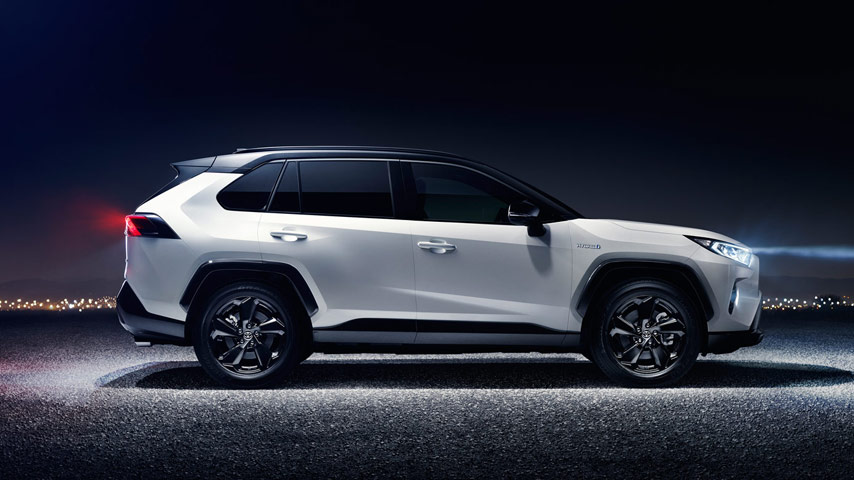
I know this is subjective but: Is there a reason they needed to add those distinctive and overly-futuristic headlights that screams electric car?
One of the reasons I like Tesla vehicles is that while they look decent they don’t try to overly differentiate themselves. They look like standard mid-market cars.
I would think that if Rivian is targeting the truck/full-size SUV crowd then they would lean on a more traditional look?
Forget the headlines, it's a pickup truck that doesn't list bed length in the marketing materials.
The pickup truck is the new SUV, but come on. At least let me pretend to consider if I can fit a sheet of drywall in there.
Also, I hate,hate,hate the trend of putting the spare under the bed floor, instead of under the frame. Clearly a design decision by someone that doesn't use their pickup bed for picking things up...
> Clearly a design decision by someone that doesn't use their pickup bed for picking things up.
Seems like a reasonable engineering trade-off for an EV to me; unless you can figure out an equally aerodynamic solution with the spare under the frame. You want to maximize range all the time (by reducing drag), but you only rarely need to access the spare.
If you badly need access to spare all the time and you're willing to sacrifice range 24/7 for it, I'm sure there will be after-market solutions, similar to bike-racks.
> Clearly a design decision by someone that doesn't use their pickup bed for picking things up...
To be fair, this is the vast majority of truck drivers. Exceedingly few trucks sold today will ever be asked to do something that requires a truck, most are commuter vehicles driver for social status reasons. A few occasionally might tow a boat.
All while our only planet is going to shit because of fossil fuel usage. American fuel is too cheap, making this kind of excessive fuel burning possible without paying the external cost.
It’s also an unwise business plan. Ford cancelled all of their sedans in the US except the mustang, which is clearly a cheap fuel bet. I personally call this plan “bonuses today, bankruptcy tomorrow”.
In a sign that the universe has a sense of irony, the F-150 factory promptly caught on fire when they announced this.
You must live in a high density urban area. In suburban Ohio where I’m from people can and do buy pickup trucks for status reasons. Those bigger trucks can cost up to $70,000.
A F-150 was sold in 2018 every 35 seconds. They sold 450,000 of the things in 2018, and that’s not even counting any other truck made by Ford or anyone else. I guarantee you a huge percentage of those do nothing but commute.
None of them do nothing but commute. Many may commute a lot, but that’s irrelevant. Truck owners like to have trucks because of how useful they are when you do need them. It doesn’t really matter how often that is. They see no downside to having it for those times you need it, unlike a Prius, where your vehicle does one thing well (commute) but optimizing for that limits what you can do with it. They feel that they have a commuter, a hauler, an off-road vehicle, a winter snow vehicle, and something that can tow. They can be self-sufficient under a wide range of circumstances. The Prius owner has to ask that friend with a truck if he can help them, pay someone else to do it, or just stay home.
And that’s not how status symbols work. It would be more accurate to say that luxury trucks are status symbols, not trucks. Nobody buys a truck as a status symbol, but maybe they buy a nice truck as one. The same statement applies to cars.
The idea that someone “needs” a truck because once a quarter a friend moves is just something I do not agree with. It would be far far cheaper and more practical to rent the few times that you need a truck.
Truck owners are buying trucks largely for the feeling of self sufficiency, a fake one given the sheer amount of resources required to operate a modern vehicle, which is what makes it a status symbol. Its exactly the same as someone who “needs” a Jeep because it occasionally snows, even though their neighbor’s Honda Civic is doing just fine in the same conditions.
Also, the idea that a truck is a good snow vehicle makes me giggle. My Subaru always outperformed them in snowy conditions.
At what point did I say that other cars aren’t status symbols? I also singled out garage queen race cars in another thread.
But if you want to attack my vehicle choices; I ditched the Subaru when I left Colorado, a location where it was useful, and switched to a small sedan when I moved to LA. More reasonable, more efficient, and cheaper to operate.
CAD design vs reality. A lot of fuxked up things today are a result of too much CAD design, thin laptops with no repair utility. Difficult to repair cars etc.
Same reason purses don't NEED logos all over them. A lot of buyers of EVs aren't doing it to save the environment - they are doing it to let everyone know they are saving the environment. If your car just looks like a Ford Focus, you lose that.
The primary reason the Nissan Leaf looked as dumb as it did was because it appeals to early adopters to have something that is outwardly different from convention. I would imagine they're taking a similar approach here.
Ehh, the Gen-I Prius (MY97-03) was also sold as the Echo with a traditional powertrain, and it looked pretty normal, if a bit homely.
The Gen-II Prius ('04-09) was smoother and looked more uniquely-Prius, but it still had pretty normal headlights and stuff. I think it was the most normal of the bunch.
The Gen-III Prius ('10-14) took the Kammback profile even more seriously but still doesn't look totally alien. Unmistakably Prius, though.
The Gen-IV Prius ('15-present) is where the design went completely off the rails, jarring slashy features on an otherwise-watermelon-seed-shaped car.
Yeah, I think the Gen 1 is largely overlooked because it was just a repurposed Echo. That might actually be validation of why new technologies adopt unconventional designs.
Difficult to resolve this kind of thing either way. If you like it you like it. Could reasonably ask why Tesla has old fashioned headlight design? Purely subjective.
This has been my complaint of every EV up until the Tesla Model S. EV seems to equate to no aesthetic design to manufacturers. All you have to do is look at the Chevy Bolt. It’s sad we even call that thing a car IMHO.
I'd argue the opposite. I wish car companies would push their EVs further into the futuristic aesthetic.
The Chevy Bolt is a wonderful vehicle, but it looks almost exactly like a legacy gasoline car. A regular person could easily mistake it for the current Chevy Spark. Similarly, the Chevy Volt looks almost exactly like a Chevy Malibu. And a Nissan Leaf looks fairly similar to a Nissan Note.
I'm aware that they don't want the car to look too "scary" or unusual, and it's a huge cost savings to re-purpose existing parts/designs. But just as a personal preference, I wish the more EV-focused concept-car-styled designs could actually make it to market.
I think the BMW i3 struck a good balance with futuristic looks. It's just different enough to be noticeable, but not so different to appear impractical or off-putting.
The Tesla model 3 has a lower drag confident than the original Prius while looking much more like a normal car. The hatchback is inherently a poor choice from an efficiency standpoint.
Oddly they are both beaten by the Audi A4 sedan and several others.
I've always thought of the Prius design as similar to Birkenstock shoes - not pretty but the most practical in terms of aerodynamics and arch support.
EV's need to focus more on aerodynamics to eke out range rather than look fast, which they are already are at low speeds across their torque band anyway.
That's insane. One-third of Tesla's market cap and they seem to be far behind in self-driving, battery tech, charging infrastructure and product development.
Pretty smart they aren't sinking any $$$ into self-driving moonshot tech. Keep lean, build a high-performance tight truck/suv with current driver-assist tech.
Self-driving is the future. Mankind will one day realize 1.25 million deaths a year from crashes is unacceptable. Tesla is on the forefront of that, it would be dumb not to be sinking money into it. If they don't now, they'll lose their lead, lose marketshare, and lose their training data.
You do realize that everybody still drives knowing the risk? The driving force behind self-driving cars is convenience, it will never be safety -- especially when the fist $x decades of mass-adopted self-driving cars will be more dangerous than human drivers. If safety was that important and the political capital existed to actually change things then we could make a huge dent with just the things we know right now.
Self-driving is a safety feature. It's a really advanced form of driver assistance, which is a safety feature. ABS, Forward Collision, Lane Assist, Blind Spot detection, these are all safety features. Self-driving is a combination of all of those with extra radars and cameras and AI.
Safety features can also be considered a convenience, but that doesn't mean they aren't safety features.
Humans zone out, they get tired, they have slow reaction times, they only have 2 eyes, they get complacent. Computers do not.
Current self-driving cars are already orders of magnitude safer than human drivers. I agree convenience is likely the largest driving factor but safety is definitely emphasized.
I think we should all be able to agree that there are no commercially-available "current self-driving cars" - there are cars with ADAS, but they are far from self-driving. And if you tried to let your "self-driving car" actually drive itself on the typical routes that a person takes through the course of a month (not on a closed course), you would never arrive, either because you died in a crash or because the car gave up.
(NB: I own a Tesla Model 3 and have the various "self driving" options.)
Where are you getting that all of these accidents could have been prevented with faster reaction times?
I mean if you're right and reaction times are all that matter then we don't actually need self-driving cards for the safety benefits, just somewhat improved emergency collision avoidance/braking systems. Much easier problem to solve.
Putting unproven self-driving software into public use won't lead to a reduction in deaths. If Tesla were serious about preventing traffic deaths rather than pushing whizbang tech out before it's ready, it could push a software update that makes it impossible for its cars to speed on surface streets tomorrow.
tesla wants to stay in business as a company, that would kill them, as it would any company. you might not be aware that on non-freeway roads, tesla won't let you 'auto-drive' more than 10 miles over the speedlimit. you can just 'drive' any speed you want, but you can't engage autopilot more than 10 over on side streets.
But they are though. Who would buy a pickup without Auto pilot like feature when ones available. That includes the fact that Tesla already has the best range for price.
Compare Tesla's market cap to Fords. Tesla is far behind in producing cars in volume, service centers, repair parts, product development, making actual profits on a sustained basis. It's lunacy.
Pointless comparison really, you're comparing a startup (in automotive industry context) to a company established in the 1900s. Tesla's revenue growth is 40x Ford.
Anyone can grow revenue quickly losing other people's money. The point I'm trying to make is TSLA is extremely overvalued, future earnings will never justify it's multiple, if the company even has future earnings at all.
Ford did after all have a 100 year head start. Is it realistic to expect a 16 year old company to have the same level of everything as a 116 year old incumbent?
They definitely have a real product. They demoed their EV truck at the LA Auto Show this past year. They haven't made it in mass quantities, so at this point its more like the original Tesla Roadster, but at least one of their products actually exists.
They have a shell and some technology right now. Has a real person driven one and can confirm it does 410 miles? Or the claimed 0-60? I haven't seen that anywhere and I've been looking, would be happy to be wrong.
I get uneasy when I see a company without proven tech spend more time on marketing videos than showing off the car. If it works, where is the footage of it working up to par?
As a general rule automakers don't normally show off prototypes of future production vehicles in action, except for test vehicles not intended to be produced in quantity.
The reasoning is that there is very limited positive upside from showing off an ugly prototype with all its beta-testing flaws, but a huge potential for a bad demo to kill the market prospects for the model.
Actually most automakers do show off prototypes but they usually classify them as one of the following:
Concept: Might as well be cardboard cutouts. A physical representation of pie-in-the-sky design with little basis in reality. An example would be the VW ID Buggy.
Functional: Usually a Frankenstein vehicle cobbled together from catalog parts with intended purpose of vetting a design or idea. An example would be the EV and Hybrid variants of the Porsche 718 Boxster.
Manufacturing: Very close to the final production model but still with a few kinks. Examples would be the Honda e Prototype, or the Ford Mustang Shelby S560
Rivian doesn't give any clear indication of what they're showing off but want you to believe it's the later when it could be the former.
Musk says a lot of things that aren't true because he's unwilling to listen to expert advice. A lot of the "hell" that Tesla has been through the past year--especially with the logistics--are nonissues for everyone else because the solutions are either industry SOP are such basic tasks that expertise isn't required (like properly labeling your imported products...).
Rivian will be building products with Ford's assistance (and Ford will be building products using Rivian's tech). Ford has been building cars at scale for more than a century, and I'd bet a pretty penny that Rivian will take their advice on how to structure their manufacturing process.
Tesla would absolutely still exist. Tesla wasn't founded by Musk, it was founded by two other guys as an EV boutique manufacturer that was profitable selling handmade EVs based on other carmaker's frames.
Indeed, Gwynne Shotwell over at SpaceX shows what a Tesla without Musk would look like: functional, industry-leading, and with a history of actually reaching its goals on the timelines set forth.
Musk is an arrogant blowhard who is trying to cover for his failings. The Musk ventures that are going well, like SpaceX, aren't managed by him on a day-to-day basis. He's not a good CEO and from information publicly available has no business managing people.
A lot of people are tired of his fanboys. It’s similar to how people reacted to Steve Jobs fans.
Personally I think Musk is smart but highly overrated. He makes a lot of dumb mistakes by ignoring advice, and seems to have a lot of impulse control issues. As an ideas man he’s one of the best, but hike badly needs an “adult in the room” to moderate his worst impulses.
It seems like people are saying it's a big new idea, but it's how things used to be done before uni-bodies. Are uni-bodies not as suited to electric with their large low-slung power packs?
"Skateboard" is a term that's been thrown around since the 90s to describe how EV platforms can be fully modular. I remember reading Popular Mechanics magazines back in the day, touting how EVs would let us drive our sports car to the dealer, have them remove the roadster body, and replace it with an SUV body for that long family Thanksgiving trip to Grandma's house (for example).
It's a lot like body-on-frame, I suppose, but the idea is all of the powertrain is in a more-or-less flat device, and the seating area is completely disambiguated from the drivetrain.
I think I remember that same article, or a similar one from around the time frame. It also suggested some radical improvements. Once a car is based on a "skateboard" design, the front window can extend a lot further down allowing for some amazing views.
It didn't seem to think about the danger of removing a crumple zone, but it was definitely eye-catching.
Actually, our model 3 has an amazingly low dashboard, it's one of my favorite things about it. Side windows on modern cars, not so much. Crash standards have made our cars cocoons you can't see out of.
But owning the 3 has definitely made me think a lot of the skateboard model:
* Flat floor, no transmission/exhaust tunnel.
* User interface (screen) is indepenent from body control modules and drivetrain. You can reboot the tablet while you're driving. Your turn signals stop making noise, but still flash! You can walk up to the car and it unlocks even if the tablet isn't working.
IT's interesting ,you can really feel how discrete certain components are, how they can be rearranged and put into a different model. I'm sure there are more dependencies than I realize, though.
I think your second point is true for lots of (all?) vehicles today, which have an architecture of multiple modules communicating over a CAN (car-area network) bus. I did a firmware update on my Pacifica PHEV while I was driving it, and though I lost the ability to listen to the radio and change settings on safety and convenience features (rain-sensing wipers, blind spot detection, etc.), the car still ran fine (and all of the safety features still functioned).
I understand in EVs, “skateboard” refers to the chassis of the car using the battery pack itself as the base/floor of the car and then building everything in top of it. So-called because the battery pack with frame and wheels resembles a skateboard.
It’s used in comparison to “conventional” EV sedans from Ford, GM, and older lead-acid/bulky battery tech where carmakers would take an existing car design (that’s meant for an ICE engine and drivetrain) and merely replace the engine with a motor and put the batteries somewhere where they would fit, usually in a tall box shape under the rear cargo area, under the rear passenger seats, and in the front engine compartment as doing so means not having to drastically reengineer the car to put the batteries in the floor - but it means there’s less space for batteries and they consume car volume that would otherwise be free for use by the passengers.
I imagine if the Ford Focus Electric was skateboard then they could get 200-250 miles of range and and a fully open frunk and trunk - whereas instead you lose more than half the trunk space (no spare tire either!) and the engine compartment is still full of legacy components with no passenger storage area - for only 150 miles of range.
This contributes towards the perception that the legacy automakers aren’t taking BEVs seriously enough because none of them have developed and shipped a true battery-first (I.e. skateboard) car design.
Yeah, basically. But now the frame is solidly mounted to the body because in 2019 we want the chassis rigidity and can reduce NVH in other ways. People have been hard mounting the body to the frame of BoF vehicles to increase rigidity for a long time though so that's not new either. There's no hard line. It's like how at one point we had wagons, minivans and SUVs but now we have crossovers that blur the lines. Vehicle construction is the same. You can have a ladder frame and then shove a bunch of batteries in it. Is that a skateboard? What if it's a perimeter frame? What if the batteries contribute to the rigidity of the frame?
When the term was first used (GM Autonomy 2002) it was a concept for a complete powertrain below the hubline. Ya, it's pretty similar to body-on-frame, although it suggests much more freedom in body design since nearly all of the power train is below the hubs.
I think it's the combination of integrating the battery pack into the lower frame structure of the vehicle, and also integrating all of the drivetrain components into that flat frame. In a body on frame vehicle the engine still sticks way up above the frame and has to be accounted for in the body design.
Everything built on the F-150 frame looks like an F-150 (F-150, Expedition, Navigator), but something like VW's MEB platform can have a lot more vehicle shape variety (ID 3, ID Crozz, ID Buzz, etc.)
Anyone know when these will hit the market? I'd love an electric SUV. As much as I would PREFER a self driving SUV (level 4+), I don't see that being truly amenable in the next 5 years.
The models Rivian has announced are supposed to go into production next year (2020). The more investment they get the more likely I think it is that they hit that goal, but they're already taking preorders and production will probably be limited at first so there might be a wait.
They're supposed to go into production end of next year. Given that they haven't even built a working one, I'd say that's optimistic, but I do hope they succeed! We will see how much the extra investment they have is going to speed up the process.
Just this week at the LA Auto show Rivian's head designer confirmed the pickup on display is the only one they have ever built, and it was built by hand.
The interview begins at yellow marker, ~4:00. Maybe it's just me, and I guess it's really just a personal 'pet peeve', but is it off-putting to anyone else how he constantly saying "gives ME ...", "I have four motors", "so I can...", etc...
Perhaps I've been driving people crazy all these years, but "we" usually sounds so much better (even if it is just you) and a lot less ... lousy and self-centered. Maybe he really is the guy -- it just rubs me a little wrong, especially when I suspect it really is we -- as in, the team.
I just mean that I haven't seen any footage of a Rivian actually being used or doing what they say.
There are marketing videos but for all I know that's an F-150 with a new skin.
You would assume if they really had something with 410 mile range they would have a journalist come and do some long drive, I.E. Tesla going from LA->SF two days ago.
Or showing off it's acceleration. I really don't think they have even a single working truck that does what they say it does yet. Not to say they're a fraud, just that they're not there yet.
As I've understood it, and this might be what you mean, it's just the F150 bodies that were put on top of the Rivian Skateboard. And that's what they've been testing for years.
Tesla might beat them to production, Rivian is already backlogged to 2022 with preorders and they have yet to manufacture a vehicle that is not a prototype.
It’s big - but not Escalade-big. It’s more accurately described as a large crossover (CUX? XUV?) than a true SUV. Confusingly Tesla refers to the smaller Model Y as a Crossover even though it’s closer to an MPV (Ford C-Max) than a Crossover like a Honda Pilot. I think they’re justifying it by the fact you can get it in a 7-seat config.
There are so many predictions on how it will look but yes they are making pickup truck and possibly unveiling the prototype later this year. If found some info here https://insideevs.com/tag/tesla-pickup-truck/
I'm decently sure that voiding the warranty for off-road usage would violate US law? I really don't think there's a whole lot you can do to void a vehicle's warranty in the US -- outside of intentional / malicious / collision damage.
Any damage caused by off-road usage may sometimes fall under collision damage, but generally I don't think that usage which is legal and non-negligent would void a warranty in the US. I'm not even sure if negligent usage would invalidate a warranty claim, though likely depends on the circumstances.
Note that IANAL -- just a consumer who often sees very clearly wrong "voids your warranty" statements far too often. I don't claim to know the precise hypotheticals here either, but I am confident that it's truly difficult to void your entire warranty (at least in the US).
Sure, pulling your touchscreen out and damaging it in the process = no warranty for the touchscreen. But if an axle subsequently snaps, the manufacturer cannot legally (in the US) deny your warranty claim based on other unrelated vehicle modifications.
There's no law that would prevent manufacturers from saying that a product warranty is voided if it is used for purposes other than its clearly intended use. It would be one thing for a car maker to say that the warranty for a normal car is voided by normal use (i.e., driving on a road), but off-road driving is a very different beast from regular, on-road driving. Off-road vehicles like Jeeps and Suburus are made with special suspensions and drive trains for a reason...
>There's no law that would prevent manufacturers from saying that a product warranty is voided if it is used for purposes other than its clearly intended use.
The onus is on the manufacturer to prove the consumer’s actions caused the product to fail. And off-road use (not rock climbing but driving on dirt roads) is normal use of any vehicle.
The Magnuson-Moss Warranty Act doesn't do what you think it does...In fact, it explicitly provides that warranties are not required and that the scope can be limited by the warranty-provider, so long as the limitations are fair.
See https://www.edmunds.com/auto-warranty/what-voids-your-vehicl.... Car industry experts agree that off-roading will generally void the warranty of any car not sold as an off-road model, or with off-road capabilities that are advertised as such (like 4WD). This is because, as I previously stated, the demands placed by off-road use are very different from the demands of normal road use.
Also see the insurance/warranty limitations for any vehicle rented on the Big Island of Hawaii, which all deny coverage related to the off-road use of any vehicle that doesn't have 4WD.
First renewable energy and now electric cars have turned from something that was science fiction, always N-years off, an environmentalist's fantasy, laughable, to something that is mainstream reality in my lifetime.
I mean, in BTTF II/III, the DeLorean was upgraded with a Mr Fusion and made a flying car but it still used an ICE to drive. How weird is that?
Meanwhile, it's no longer a question that solar and wind are going to comprise a large fraction of our energy supply in the near future; it's only a question of how much, how quickly, whether it will cut CO2 emissions enough, and what the waste/lifecycle costs will amount to. Electric cars are the way things are going; even if Tesla collapsed into its own hype-bubble, every other car manufacturer now produces electric cars, people are buying them, the charging infrastructure is getting built out. The only questions left are what (large) fraction of the market electric vehicles will eventually grow to, how quickly they'll reach it, and whether it will again help our CO2 emissions enough, fast enough, and what waste/lifecycle problems will EV introduce.
It's weird to me that between renewables and EV we have a real chance at Y2K'ing global warming.
> electric cars have turned from something that was science fiction, always N-years off, an environmentalist's fantasy, laughable, to something that is mainstream reality in my lifetime.
Electric cars are older than gas cars, and never really went away, though they spent a long time as niche vehicles.
Agree. I think more accurately it took a competitor doing it and showing the cars were desirable. No Tesla, no Rivian, no Ford investment in Rivian, no iPace, no eTron, etc. AT least IMO.
I'm super curious how this will integrate with Argo. Kind of smart for Ford to invest in an electric vehicle while their other subsidiary develops the self driving car capability.
It's even smarter of Ford to (recently) recognize that self-driving cars aren't going anywhere anytime soon, and to double down on the electric car investments.
You can certainly see why they bailed from their existing car lines.
I can understand where all the car manufacturers have the same problem. They're afraid of building one too many generations of IC-powered designs (which are also following a Moore's Lawish rule of increasingly complex design) but aren't really sure what's next.
> You can certainly see why they bailed from their existing car lines.
For clarity, I assume you are referring to the elimination of sedan models from their lineup. They are producing more crossovers and SUVs, pickups than ever.
They didn't really have a choice, sales on sedans have been dropping like a rock.
I would argue that the integration won't be that hard at all. Like you said, Argo is focused on self driving capabilities while Rivian is more about the vehicle production, so there's probably little to no overlap.
It really is - especially having an idle auto manufacturing plant here. There’s not much else you can do with those, so seeing it put to use is great, rather than just collecting dust.
I’m assuming the justification was something along the lines of a) enabling a credible consumer of ford’s x, y and z products (from finance, to parts, to logistics, to whatever is tucked underneath the blue oval). B) enabling of a workforce that can provide a number of things back to the blue oval from software to battery pack design, motors, enlarged / shrunk skates to fit a number of non truck needs, and c) blocking strategy to ensure competitors like Nissan, Honda, etc don’t buy them. Electrification is going to be a huge issue now that the domestic US fleet has essentially abandoned cars (which traditionally have anchored a mfr’s cafe average). Once you dump cars for vehicles that get single digits to mid teens in terms of mpg, you’re in kind of a pickle.
Ford has its own auto financing division called Ford Motor Credit. This division has about 80b of long term debt in the form of consumer auto loans for the purchase of Ford vehicles.
Moodys downgraded this debt last fall.
First time hearing of Rivian. Cool concept, i imagine getting electric motors to move huge trucks around is a better/more mainstream application then a 0-60 in 2 second hyper car.
Looking at their product line up this is strictly for US markets right? This thing would be wildly out of place in any town/city I've lived in.
These kind of pick-up trucks are hugely popular all around the world. They're not always American - look at the Toyota trucks that are massive everywhere. But yeah they're rural vehicles - you wouldn't see them much if you live all your life in a city.
There are a lot of places that trucks and SUVs sell well - the US is the biggest right now, but Canada, China, India, and Russia all come to mind as consumers of vehicles like this.
Global sales of just one truck similar in size to the Rivian - the Ford F-150 - topped 1M units in 2018, making it the best selling vehicle globally, beating out the corolla and the civic by 140k and 250k units respectively.
That might explain it then, i'm not fantastically well traveled outside of Europe and the only place I've seen monsters like this is Florida and Maine...
You'll find big SUV's and pickup trucks in every state. No US state is purely urban. Even when it is mostly so, there are still people who drive obscenely large vehicles (ICE of course for now) like these electric ones.
It is also the case that full size trucks are heavily used as fleet vehicles for companies and municipalities. F-150s are very popular for this, in particular.


Edit: To clarify, my basis for this is something Mike Levine said (he is Ford NA Product Comm Manager):
"Ford’s battery electric F-150 has been under development for some time and will continue as planned. Ford is using Rivian’s skateboard platform as the basis for an all-new vehicle."
https://twitter.com/mrlevine/status/1121027970917912577